Dellent Power specializes in 4kVA–2300kVA diesel generator sets, powered by top brands like SDEC, Cummins, Perkins, WeiChai, and Isuzu. ISO9001 certified for premium quality.
🟢 WhatsApp: +86 13706938606
This article takes a systematic approach to break down everything you need to know about diesel generator sets—from core engineering principles to practical equipment selection. Whether you are an industry practitioner or a procurement professional, this guide will give you a quick grasp of the critical information you need. We highly recommend sharing and bookmarking this post for future reference!
Section 1
Core Knowledge and System Components of Diesel Generator Sets
▌Core Positioning: Reliable Emergency Power Protection
A diesel generator set is an indispensable emergency power supply solution. Its primary function is to guarantee power reliability and continuity. In the event of a municipal grid failure or interruption, the unit can start up rapidly to provide continuous and stable power support for Level 1 and Level 2 critical loads (such as fire protection systems, emergency lighting, data centers, etc.). It serves as the ultimate solid line of defense in any power safety architecture.
▌Regulatory Standards: Adhering to Global & National Guidelines
Our diesel generator sets are designed and manufactured to meet strict quality and safety benchmarks, aligning with both international standards and corresponding national criteria:
- ISO 8528 / GB/T 2820: Reciprocating internal combustion engine-driven AC generating sets
- IEC 60034-1 / GB/T 755: Rotating electrical machines – Rating and performance
- GB/T 4712: Grading requirements of automated diesel generator sets
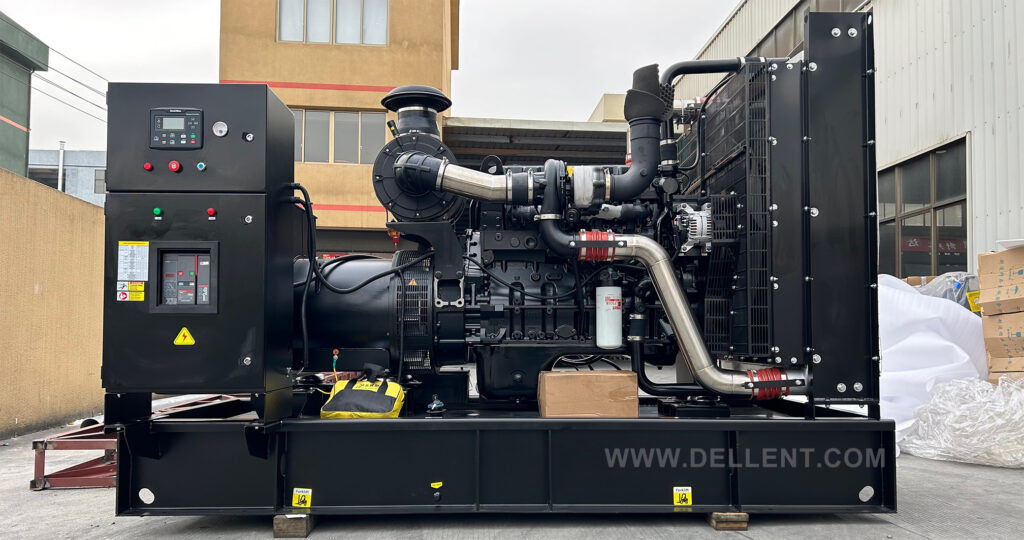
▌System Components: What Makes Up a Complete Generator Set?
A standalone diesel generator set is not just a single machine, but a fully integrated engineering system. Its core components include:
- Power System: The diesel engine—the “heart” of the entire generator set.
- Alternator System: The AC alternator, which converts mechanical energy into electrical energy.
- Control System: An integrated control panel/switchgear, used for monitoring, manual operation, and automated management.
- Auxiliary Systems:
● Cooling System: Radiator and fan assembly, ensuring the engine operates within its optimal temperature range.
● Fuel System: Daily fuel tank, fuel supply pipelines, and filters to guarantee a steady fuel supply.
● Exhaust System: Industrial-grade silencer and flexible bellows, responsible for emissions discharge and noise reduction.
● Starting System: Starting batteries, battery charger, and connecting cables. - Structural Components:
● Steel Base Frame: A rigid foundation that integrates the engine and alternator, typically featuring built-in anti-vibration dampeners.
● Accessories: Connecting bus ducts (or heavy-duty cables) between the generator unit and the switchgear.
Section 2
The Diverse Classification System of Diesel Generator Sets
When planning a backup power system, the primary step is selecting the right generator set. Based on different classification standards, diesel generator sets can be categorized into several major types to precisely match diversified application scenarios.
▌Classification by Output Power
Power output is the most critical parameter of a generator set, directly determining its load-carrying capacity. Based on the prime power range of a single unit, they are generally categorized as follows:
- Micro Units (10 kW and below): Best suited for small retail shops, residential backup, and mobile outdoor operations.
- Small Units (10 kW to 200 kW): Widely used in residential communities, small-to-medium manufacturing plants, and telecom base stations.
- Medium Units (200 kW to 600 kW): Ideal for large commercial complexes, mid-sized data centers, and healthcare facilities.
- Large Units (600 kW to 2000 kW): Designed for heavy industrial manufacturing plants, ports, and regional infrastructure projects.
▌Classification by Operational Environment and Configuration
Different installation and operating environments demand targeted generator set designs:
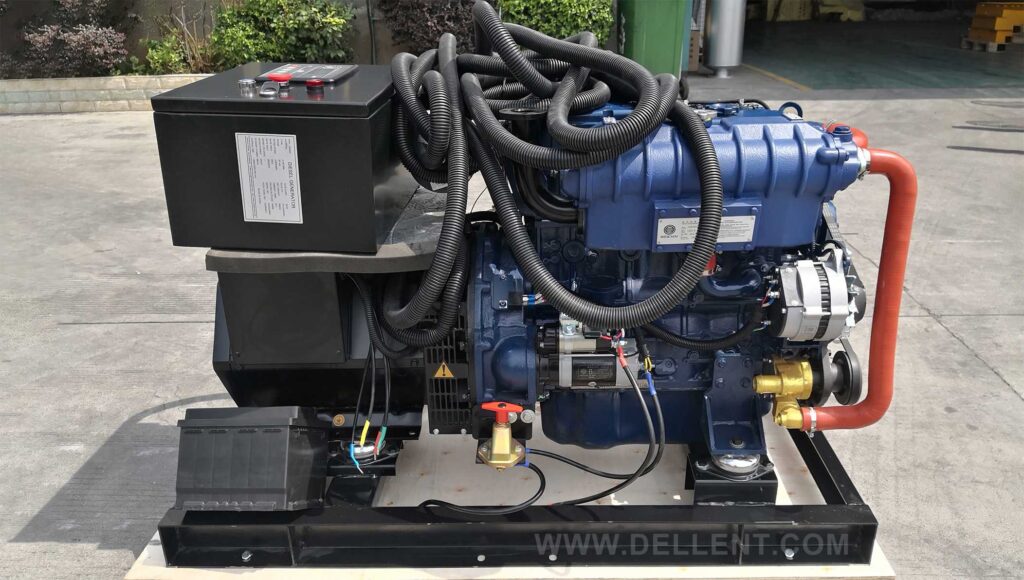
- Land-Based Generator Sets: The most common foundational configuration, designed specifically for stationary or mobile onshore installations. They meet the vast majority of industrial and commercial applications.
Subcategories include: Standard open-frame type, mobile trailer type, water pump type, and drone-charging type. - Marine Generator Sets: Engineered with superior corrosion resistance and anti-vibration/anti-shock capabilities. These units comply strictly with classification society regulations and serve as auxiliary or primary power sources aboard vessels.
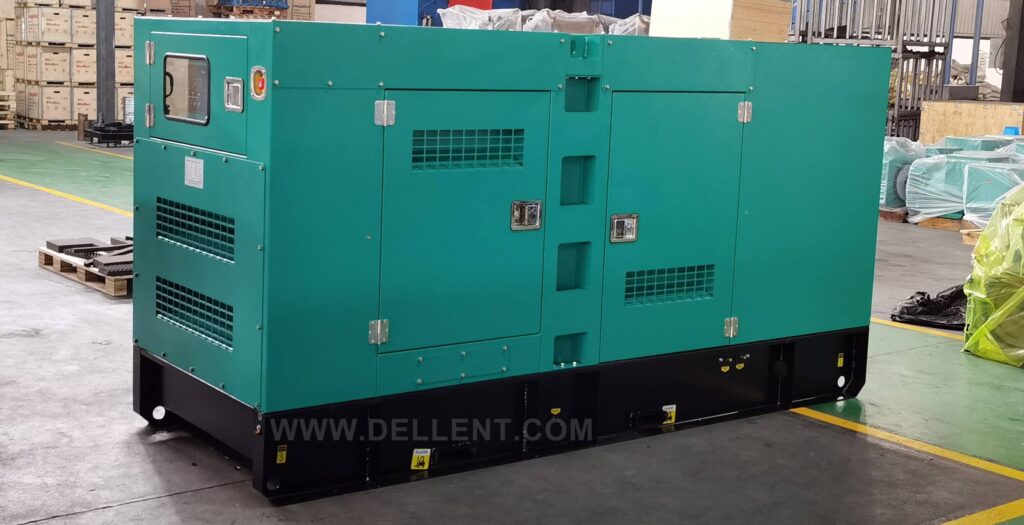
- Containerized Generator Sets: The entire system is integrated into a standard ISO shipping container. They offer an exceptionally high protection rating, featuring heavy-duty rainproofing, dustproofing, and noise attenuation. They are ideal for outdoor sites, oil fields, and temporary power supply due to their ease of transportation and rapid deployment.
▌Classification by Cooling Method
The cooling system is critical to maintaining stable engine operation. Units are primarily divided into two categories:
- Air-Cooled Generator Sets
● Mechanism: The engine’s built-in fan generates an airflow that blows directly over the cylinder liners and cylinder heads fitted with cooling fins.
● Characteristics: Simple structure and straightforward maintenance, with no risk of coolant freezing or boiling.
● Applications: Mainly used in low-power applications (such as micro or small units) or in environments with extreme water scarcity. - Water-Cooled Generator Sets
● Mechanism: A water pump circulates coolant between the engine’s internal water jackets and an external radiator, while a fan forces air through the radiator to dissipate heat.
● Characteristics: Delivers more uniform and efficient cooling, operates with lower relative noise, ensures the engine runs at its optimal temperature, and extends overall equipment lifespan.
● Applications: The absolute standard choice for medium and large generator sets, guaranteeing high reliability and high-power output.
Expert Advice: For applications exceeding 200 kW, water-cooled generator sets are the unquestionable industry standard due to their superior heat dissipation performance and operational reliability.
Section 3
Market Brands and Core Parameters of Generator Sets Analyzed
▌Brand Landscape
- Engine Brands (The Power Source)
● Top-Tier International Brands: MTU (Germany), Caterpillar (USA), Cummins (USA).
● Leading Chinese Domestic Brands: Weichai, Yuchai, SDEC, Chongqing Cummins (CCEC). - Alternator Brands (The Power Generator)
● Top-Tier International Brands: Stamford (UK), Marathon Electric (USA), Leroy-Somer (France), Caterpillar (USA). - Control Systems (The Intelligent Brain)
● Top-Tier International Brands: DSE (UK), ComAp (Czech Republic), DEIF (Denmark).
● Leading Chinese Domestic Brands: SmartGen, Deep Sea, Mebay, Fortrust.
▌Key Technical & Design Parameters
- Core Performance Parameters
● Power Ratings: Prime Power / Standby Power
● Rated Voltage: 400V/230V, 380V/220V (for 50Hz) | 480V/277V, 208V/120V (for 60Hz)
● Wiring Configuration: 3-Phase 4-Wire (Standard) / Single-Phase optional
● Rated Frequency / Speed: 50Hz @ 1500rpm / 60Hz @ 1800rpm
● Power Factor: 0.8 (Lagging)
● Voltage Regulation Rate: Steady-state ±0.1%; Transient-state +20%~-15%
● Frequency Regulation Rate: Steady-state ≤5%; Transient-state +10%~-7% - Deep Dive into Critical Parameters
Power Output (kW):
● Requires precise calculation of all backed-up loads while factoring in initial inrush (starting) currents.
● Standby power is typically 1.1 times the prime power.
● Standby power is typically 1.1 times the prime power.
Performance Class (G1–G4):
● Defines the unit’s voltage and frequency stability when handling sudden load changes.
● G2 Class: Suitable for most commercial and residential buildings.
● G3/G4 Class: Mandatory for loads highly sensitive to power quality, such as IT data centers.
● Higher performance classes command a premium price.
Cooling Method:
● Air-cooled systems have a simple structure and are suitable for low-power applications.
● Water-cooled systems offer high heat dissipation efficiency and represent the absolute mainstream for medium-to-large generator sets.
● Water cooling requires supporting cooling systems but ensures operational stability under high loads.
Voltage Levels:
● Low-voltage units (400/230V) are the most common.
● When a single unit has massive power capacity or the transmission distance is long, high-voltage units (10kV) can be adopted.
● High-voltage units can effectively reduce line losses.
Load-Acceptance Capability:
● Refers to the capability of the unit to withstand instantaneous heavy loads, such as the starting shock of electric motors.
● It is a critical indicator to measure the excellence of its dynamic performance.
● It directly relates to whether large equipment can be successfully started up in emergency situations.
Section 4
Installation Specifications and Safety Essentials for Diesel Generator Sets
The proper installation of a diesel generator set is the foundation for ensuring its long-term stable operation and fulfilling its role as emergency power backup. The following are critical installation precautions involving multiple core dimensions, including environment, ventilation, exhaust, foundation, and electrical systems.
1. Environmental and Ventilation Requirements
- Ventilation Design: The installation location must guarantee excellent ventilation and heat dissipation. The alternator end should be provided with an inlet air opening of sufficient size, and the diesel engine end must be equipped with an effective outlet air opening. The effective area of the outlet air opening should not be less than 1.6 times the radiator area to ensure the smooth circulation of cooling air.
- Environmental Requirements: The installation site must be kept clean. Storing or using equipment or items near the unit that can generate corrosive gases and vapors, such as acids and alkalis, is strictly prohibited to prevent corrosion to generator components. It is recommended to equip the engine room with fire-extinguishing devices that comply with fire safety regulations.
2. Exhaust System Installation
- Piping Specifications: For indoor installations, the exhaust piping must be routed to the outdoors. The diameter of the exhaust pipe must be larger than the smoke outlet diameter of the silencer, and the number of pipe elbows should not exceed 4 to reduce backpressure and ensure smooth exhaust gas discharge.
- Waterproofing Measures: The exhaust pipe must slope downward by 5 to 10 degrees toward the outdoors to prevent rainwater backflow. If the exhaust pipe must be installed vertically upward, a rain cap must be installed.
3. Foundation and Shock Absorption
- Foundation Construction: The unit foundation should be poured with concrete and accurately calibrated using a spirit level to ensure the unit is firmly placed on a horizontal base.
- Shock Absorption Treatment: To isolate vibration and noise during operation, specialized anti-vibration pads or anchor bolts must be installed between the unit and the foundation, avoiding any rigid connection between the engine body and the foundation.
4. Electrical Safety Specifications
- Grounding Protection: The metal enclosure of the unit must have reliable protective grounding. For generators that require direct neutral grounding, the neutral grounding operation must be completed by a professional electrician, and replacing it with the utility grid’s grounding system is strictly prohibited.
- Anti-Backfeeding: The transfer switch between the generator and the utility grid must be a product of reliable quality and verified certification. Its wiring logic and reliability must be inspected and approved by the local power supply department to absolutely prevent malicious accidents of “backfeeding.”
- Battery Connection: The wiring terminals of the starting battery must be secure with good contact, and checked and tightened regularly to prevent startup failure caused by loosening.
Welcome to contact DELLENT POWER. We provide professional selection support and accurate quotes free of charge.