

When diesel generator sets operate in high-temperature environments, inadequate maintenance can easily lead to a significant drop in power output (power de-rating) or even sudden, unplanned downtime. To prevent these costly operational disruptions, DELLENT POWER has compiled a comprehensive, systematic guide to ensure your units run stably and efficiently throughout the scorching summer months.
Pro Tip: Bookmark this complete guide to keep your power backup infrastructure protected when the temperature spikes.
1. Cooling and Heat Dissipation System: Guarding Against “Boiling Over“
1️⃣ Meticulous Coolant Management
Ensure the coolant/antifreeze level is sufficient and meets quality standards. During summer, strictly maintain a 1:1 ratio of water to antifreeze—never use plain water as a substitute, as it lowers the boiling point and causes scaling. Regularly use a low-pressure water gun or compressed air to blow out the radiator fins in the direction of the grain to clear away any crusted layers of dust, cottonwood fluff, or debris.
2️⃣ Optimize Ventilation and Shading
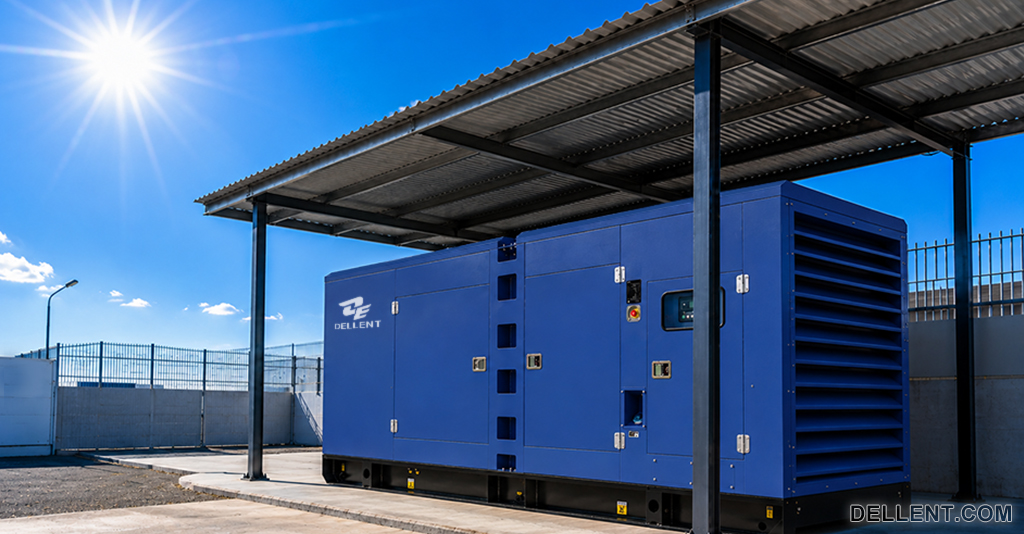
Position the generator set in a well-ventilated, shaded area. For outdoor installations, building a dedicated sunshade canopy is highly recommended. Check the fan belt tension regularly: press down on the middle of the belt with approximately 10 kg of force; a belt deflection of 10–15 mm is ideal. Too loose causes slipping; too tight damages the bearings.
3️⃣ Scientific Cooldown Scheduling
Under continuous heavy-load operations, allow the machine to rest for 15–20 minutes every 4–6 hours. Upon shutting down the engine, keep the radiator fan running (if equipped with an independent electrical fan) or allow the unit to idle until the body temperature drops below 60°C before completely turning off the system.
2. Fuel System: Guarding Against “Vapor Lock”
1️⃣ Utilize the Correct Fuel Grade
Always use 0# or -10# diesel fuel (standard summer-grade diesel) during the hot season. Avoid using high-grade winter diesel (such as -35#) in the summer; its lower viscosity at high temperatures can accelerate plunger wear in the fuel injection pump or easily induce vapor lock.
2️⃣ Prevent Air Leaks and Line Degradation
Regularly inspect the fuel tank cap vent hole and all fuel line joints to ensure airtight seals. High temperatures accelerate the aging of rubber components—replace rubber fuel hoses every two years without exception. Additionally, drain any accumulated water from the bottom of the fuel-water separator daily before starting the engine.
3️⃣ Manage Fuel Tank Temperatures
For large-scale generator units, ensure the external fuel tank is located in a shaded area out of direct sunlight. Avoid running the generator on a near-empty tank. The less fuel there is in the tank, the faster it recirculates and heats up, leading to higher evaporation losses and reduced fuel density/efficiency.
3. Operational Monitoring: Load and Temperature Redlines
1️⃣ Proactive De-rating
When the ambient temperature exceeds 40℃, the generator set’s output power decreases by 5%–8% for every additional 10℃ rise. It is recommended to control the load within 80% of the rated power.
2️⃣ Closely Monitor Critical Parameters
- Water Temperature: Normal ≤90℃. If it reaches 95℃, reduce the load immediately or shut down the machine.
- Oil Temperature: Should not exceed 100℃.
- Exhaust Temperature: The temperature deviation between cylinders should be ≤40℃.
Set up audible and visual alarms, and record the instrument panel values every half hour.
4. Lubrication System: Guarding the Engine’s “Blood” in High Heat
1️⃣ Select the Correct Summer Viscosity Grade
It is recommended to use SAE 15W-40 or 20W-50 engine oil. For turbocharged models, make sure to use diesel engine oil of grade CF-4 or above.
2️⃣ Shorten the Oil Change Interval
While the normal oil change interval is 250–300 hours, it should be compressed to 200–250 hours during the high-temperature season. Check the oil level every day before starting the machine.
3️⃣ Pay Close Attention to Oil Pressure
If the oil pressure drops below 0.1 MPa when the hot engine is idling, or below 0.3 MPa at the rated speed, shut down the unit immediately for inspection.
5. Electrical System: Preventing Moisture, Loosening, and Overheating
1️⃣ Inspect Wiring and Connections
Check the main cables to see if the insulation layer is cracked. Tighten all wiring terminals, as thermal expansion and contraction can easily cause them to loosen and overheat.
2️⃣ Battery Maintenance
Check the fluid level monthly and add distilled water to keep the plates submerged by 10–15 mm. Clean off any oxidation layers on the terminal posts and apply a protective layer of Vaseline. The float charge voltage for a 12V battery should be kept between 13.5–13.8V.
3️⃣ Moisture Prevention and Grounding
Place desiccants inside the control cabinet after rainy weather. Check the grounding resistance to ensure it is ≤4Ω.
6. Safety and Emergencies: Balancing Spare Parts and Fire Prevention
1️⃣ Stocking Critical Wear Parts
Keep a backup set containing a fan belt, the three filters (fuel, oil, and air filters), coolant, and a thermostat.
2️⃣ Firefighting Equipment Deployment
Equip the generator room with carbon dioxide (CO₂) or dry powder fire extinguishers, and check their pressure gauges regularly. Strictly prohibit stacking flammable materials nearby. Inspect the thermal insulation layer on the exhaust pipe.
3️⃣ Leak Inspection Routine
After shutting down the machine, check the ground for any fuel, engine oil, or coolant leaks.
7. Post-Shutdown Operations: Letting the Cooldown Continue
1️⃣ Delay Ventilator Shutdown
After removing the load and shutting down the engine, let the exhaust fan continue to run for 15–20 minutes.
2️⃣ Hot-State Inspection Techniques
Recheck the oil dipstick after the engine has cooled for about 2 hours, and check the fluid level in the auxiliary water tank at the same time.
3️⃣ Covering and Dust Prevention
For units that will not be used for a long period, cover them with a breathable dust cover after they have completely cooled down.
Expert Advice
- Establish an Operation Log: Record the load rate, water temperature, and oil temperature during each run. If the water temperature rises by 5℃ under the same load condition, inspect the cooling system ahead of schedule.
- Long-Term Unit Maintenance: For generator sets that have been in service for more than 5 years, consider performing radiator descaling and injector calibration.
Welcome to DELLENT POWER. We are pleased to provide you with professional diesel generator set selection support and accurate quotes free of charge.
